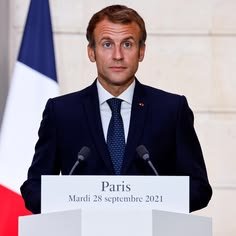
French President Emmanuel Macron has ordered the government to prepare a plan to strengthen the protection of France’s critical infrastructure and sensitive sites following warnings about an intensifying hybrid threat in Europe.
Macron made the announcement on September 18, 2026, after a meeting at the Élysée Palace with political party leaders, government officials, and senior representatives of France’s security and intelligence services.
France Raises Its Security Alert
During the September 18 meeting, Macron said France was increasing its vigilance in response to what he described as intensified Russian hybrid threats.
According to the Élysée Palace, the government was instructed to prepare a plan to protect:
- Critical infrastructure
- Sensitive sites
- Defence-industry facilities
- Strategic installations
The measures are focused particularly on potential drone attacks and cyberattacks.
What Is Critical Infrastructure?
Critical infrastructure includes systems and facilities that are essential to the functioning of a country.
Depending on the sector, this can include:
- Energy networks
- Telecommunications
- Transport systems
- Water infrastructure
- Digital networks
- Defence-related facilities
- Other strategic services
A disruption to these systems could affect businesses, public services, communications, or daily life.
Drone and Cyber Threats
Macron specifically referred to both drones and cyberattacks when discussing France’s new protection plan.
The announcement came after a period in which several European countries reported incidents involving drones and other forms of suspected hybrid activity.
French authorities are therefore examining how physical security and digital security can be strengthened at the same time.
The Leipzig Airport Incident
Macron referred to developments elsewhere in Europe when discussing the threat.
Reuters reported that he cited a recent drone incident involving Leipzig Airport in Germany as an example of the type of threat European countries are monitoring.
The French president said such incidents demonstrate that European cities and strategic sites could face new forms of disruption.
The attribution of individual incidents to Russia remains a matter for investigation and official assessments.
Russia and Hybrid Warfare
The term hybrid warfare generally refers to a combination of different forms of pressure or hostile activity, including cyber operations, disinformation, sabotage, covert activity, and other methods that may fall below the threshold of conventional military conflict.
French authorities have said they are concerned about a combination of such activities targeting European countries.
The Élysée Palace said France was also continuing work to improve its protection against foreign interference and cyberattacks.
France’s Intelligence Services Take Part
Senior officials from several French intelligence and security organizations participated in the September 18 meeting.
The Élysée Palace listed representatives from:
- DGSI — domestic intelligence
- DGSE — external intelligence
- DRM — military intelligence
- DGEC
- SGDSN — General Secretariat for Defence and National Security
They presented an assessment of the international situation, including developments in Ukraine and the Middle East.
Protecting the Defence Industry
Macron’s instructions also cover the French defence industrial and technological base.
The government has been asked to strengthen protection for the most sensitive facilities in this sector, particularly against drone and cyber threats.
Defence companies and strategic industrial sites are considered particularly important because they form part of France’s national security infrastructure.
France and Foreign Interference
France has also been developing measures aimed at countering foreign interference.
Macron pointed to VIGINUM, the French state service created to detect and counter foreign digital interference.
The Élysée Palace said France had also developed new legislative measures concerning foreign interference and cyber threats, with further work continuing through the parliamentary process.
Energy Security Is Also a Concern
The security discussion is taking place alongside concerns about energy supplies and rising prices.
Macron said the destruction of energy infrastructure in Russia and Ukraine had contributed to higher global energy prices, affecting crude oil, diesel, refined fuels, and gas markets.
The government therefore wants to strengthen France’s ability to maintain secure energy supplies while preparing for possible international disruptions.
France Prepares for Energy Pressure
Macron said France was working to secure supplies of products considered particularly sensitive, including:
- Diesel
- Jet fuel
- Natural gas
He also said France’s gas storage situation was on track to meet the European target for the coming winter, while emphasizing that Europe as a whole remains more exposed to gas-market pressures.
G7 to Discuss the Energy Crisis
Macron also announced that the G7 would meet in the following weeks to discuss the international energy situation.
According to Reuters, the discussions are expected to consider energy stocks, supply security, and possible measures to respond to disruptions in global energy markets.
France has said it wants greater coordination with international partners on energy security.
France’s Approach to Cybersecurity
Cybersecurity is an increasingly important part of France’s national-security planning.
The government’s approach includes strengthening protection for important infrastructure, improving the country’s ability to respond to cyber incidents, and continuing work against foreign interference.
These measures are designed to complement existing physical security systems.
Why Critical Infrastructure Matters
Critical infrastructure supports many everyday activities.
For example:
Energy: Electricity and fuel are needed by households, businesses, transport systems, and hospitals.
Telecommunications: Mobile and internet networks support communications and economic activity.
Transport: Airports, railways, ports, and road networks connect people and supply chains.
Digital infrastructure: Data centers and networks support government services and private businesses.
Because these systems are interconnected, an attack or major disruption in one area can potentially affect other sectors.
France’s Broader Security Strategy
The new protection plan is part of a wider French security approach.
France is maintaining cooperation with European partners while continuing to support Ukraine and monitor developments in the wider European security environment.
At the same time, the government is working to protect domestic infrastructure from cyber operations, drone incidents, and foreign interference.
What Happens Next?
The French government is expected to coordinate work across several ministries and security agencies to develop the new protection plan.
Important areas to watch include:
- Protection of strategic sites
- Drone detection and response
- Cybersecurity measures
- Defence-industry security
- Foreign-interference legislation
- Energy infrastructure protection
The final details of the plan will depend on decisions made by the government and the relevant security authorities.
France’s Recent Security Measures
| Area | Current Focus |
|---|---|
| Critical infrastructure | Increased protection |
| Defence sites | Protection against drones and cyberattacks |
| Cybersecurity | Stronger resilience and response |
| Foreign interference | Continued monitoring and legislation |
| Energy | Securing fuel and gas supplies |
| European cooperation | Coordination with international partners |
These measures reflect the broader security concerns discussed at the Élysée Palace on September 18.
Conclusion
French President Emmanuel Macron has ordered the preparation of a plan to strengthen the protection of France’s critical infrastructure and sensitive strategic sites, particularly against potential drone and cyberattacks.
The announcement followed a high-level meeting on September 18 involving political leaders, intelligence officials, and senior government representatives.
France is also addressing related issues involving foreign interference, energy security, and European cooperation, while monitoring what French officials describe as an intensifying hybrid threat in Europe.
The coming weeks will show how the government translates the new security instructions into concrete measures for protecting France’s infrastructure and strategic facilities.